
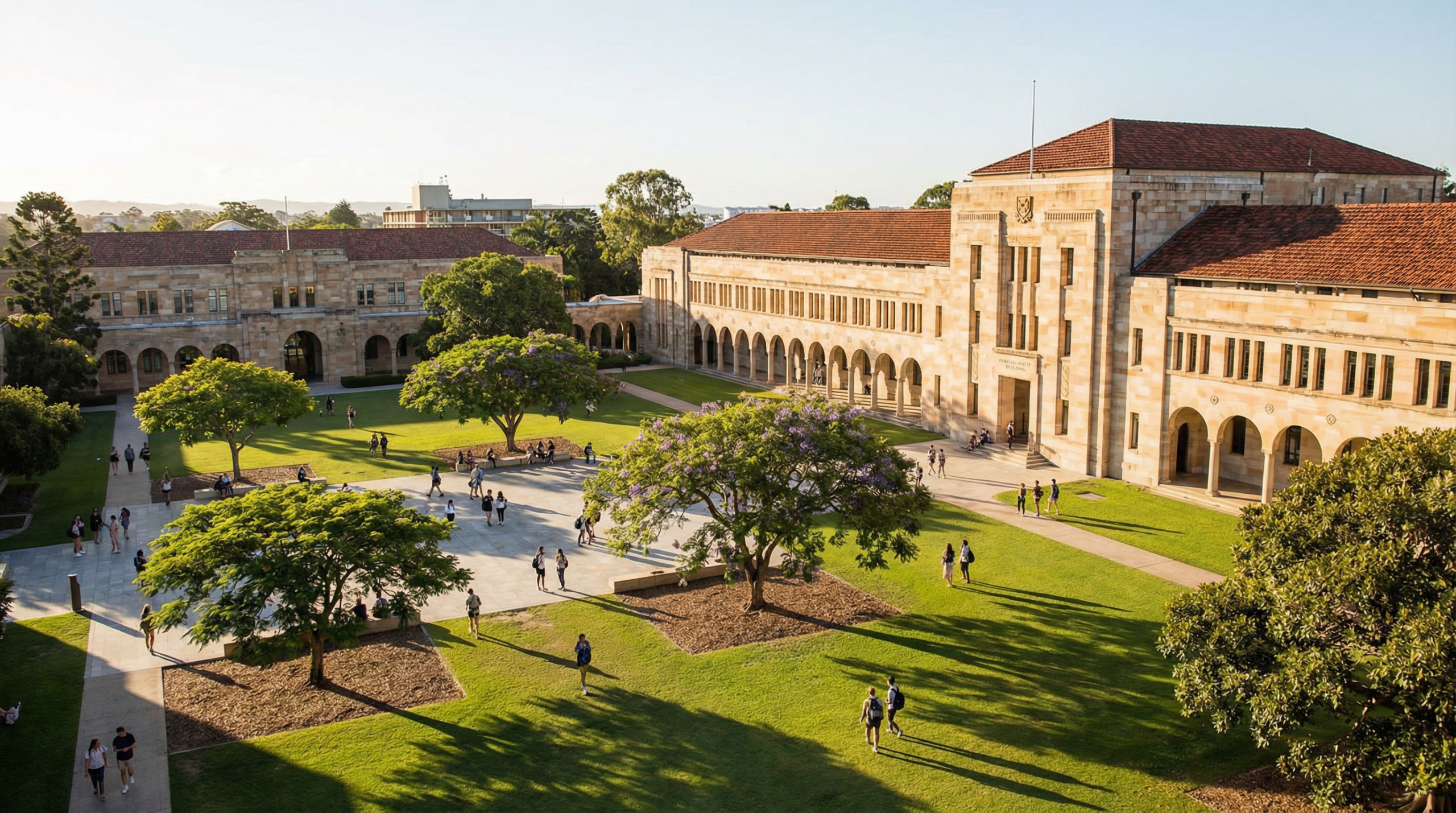
School and education security is the practice of keeping students, staff and visitors safe across schools, early learning services and tertiary campuses, while keeping those places open and welcoming. In Australia it is shaped by the Child Safe Standards and the National Principles for Child Safe Organisations, combined with sound campus physical security. This page explains what education security covers and how to balance an open campus with a secure one.
What shapes security in schools and education?
Security in education settings is shaped by the National Principles for Child Safe Organisations and the state-based Child Safe Standards, which together set expectations for keeping children and young people safe. Alongside these sit campus physical security and emergency planning.
The defining feature of education security is a tension to be managed, not removed: campuses must be open, welcoming and conducive to learning, while also being secure. The goal is to achieve both at once.
How does CPTED create safe campuses?
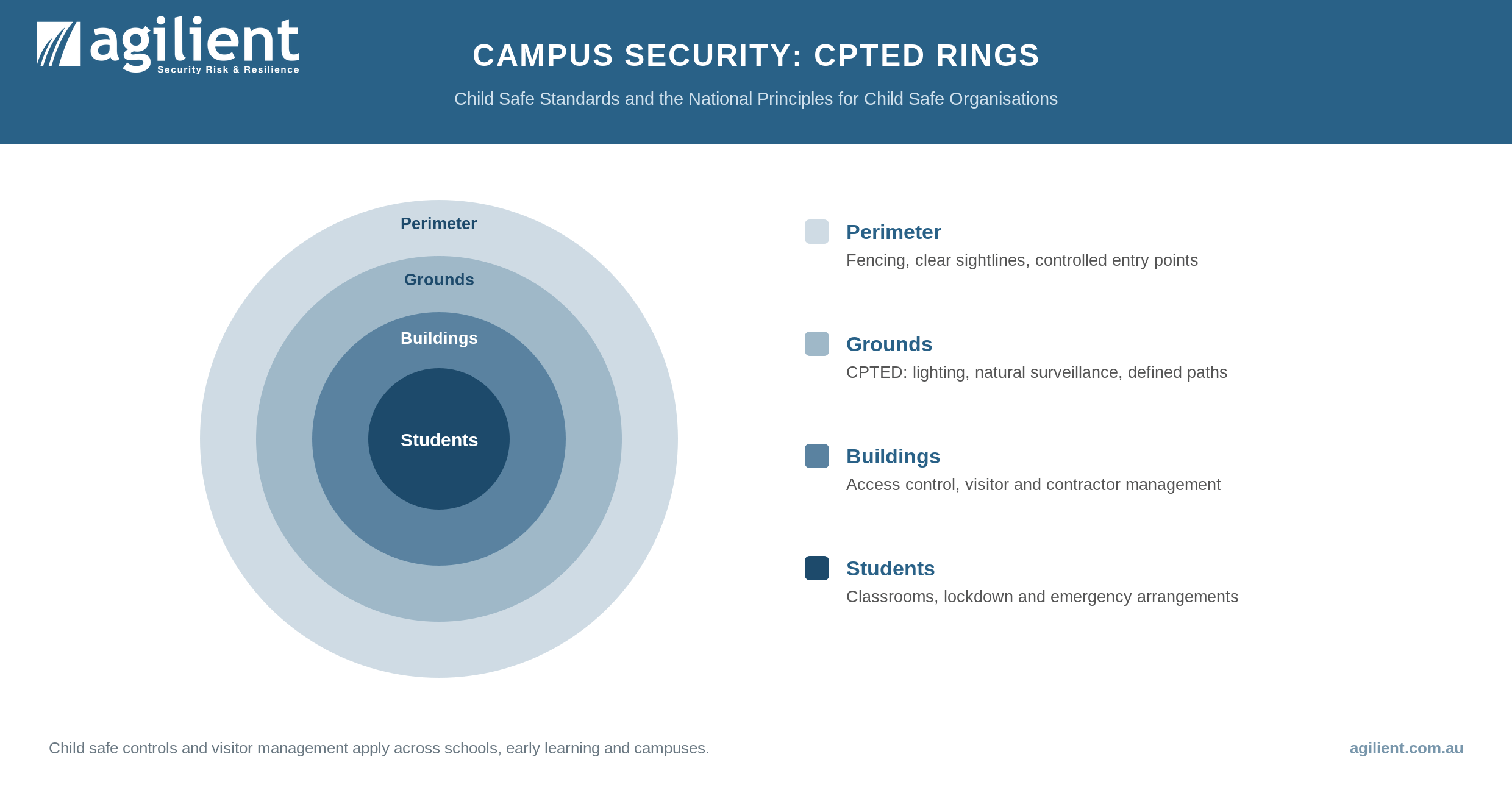
Crime prevention through environmental design (CPTED) uses layout, sightlines, lighting and clear boundaries to make a campus safer without turning it into a fortress. Well designed grounds support natural surveillance, define where visitors should go, and reduce opportunities for harm.
Thought of as layers, a campus runs from its perimeter, through grounds and buildings, to the spaces where students learn. Each layer can carry proportionate controls so the environment stays welcoming at the edge and secure at the core.
How are visitors, contractors and access managed?
Visitor and contractor management is central to education security. Identifying who is on site, directing them to a single point of entry, signing them in and supervising them protects students and staff while keeping the campus approachable.
Access management extends to keys, electronic access and after-hours arrangements, so that buildings are open when they should be and secure when they should not.
How do lockdown and emergency arrangements work?
Schools and campuses plan for a range of emergencies, including the need to lock down quickly. Clear arrangements, drilled with staff, mean people know what to do and the right spaces can be secured at short notice.
These arrangements are scaled to the setting, from an early learning service to a large university campus, and are tested so they work under pressure.
How does Agilient support schools and education providers?
Agilient is an independent, vendor neutral security and risk consultancy. For education clients, work usually begins with a security risk assessment that considers the specific campus, its community and its risks, and sets out proportionate controls consistent with child safe expectations.
From there, Agilient supports building and facility security design, CPTED advice, and CCTV and electronic security specified to the campus. The CCTV in schools guide sets out each state’s rules for school cameras. The method is set out on the security risk management pillar, and the built-environment controls on the physical and facility security pillar.
Keep your campus open, welcoming and secure
Speak with Agilient about school and education security, from child safe expectations and CPTED to visitor management and lockdown planning. The usual first step is a security risk assessment of your campus.
Request a security risk assessment
or read about the service
Frequently asked questions
What does school and education security cover?
What are the Child Safe Standards?
What is CPTED?
How do you balance an open campus with a secure one?
Does Agilient work with early learning and universities too?
- Australian Human Rights Commission, National Principles for Child Safe Organisations, childsafe.humanrights.gov.au
- National Office for Child Safety, National Principles for Child Safe Organisations, childsafety.gov.au