
Guide
Crime prevention through environmental design
How CPTED principles shape safer sites, precincts and buildings in Australia.
CPTED, or crime prevention through environmental design, reduces the opportunity for crime by shaping the places where it might occur. It uses layout, sightlines, lighting, landscaping and maintenance so that legitimate users feel safe and offenders feel exposed. The international reference is ISO 22341:2021, and each Australian state applies CPTED through its own planning guidance.
For developers, architects, councils and facility managers, CPTED is usually the cheapest security control available, because it is built into decisions that have to be made anyway. This guide explains the principles, how CPTED is applied in Australia, what a CPTED assessment involves and how it fits within a wider physical and facility security program.
What is CPTED?
Crime prevention through environmental design is a multidisciplinary approach that reduces both crime and the fear of crime by influencing how people use and perceive a space. It rests on a simple observation: offenders weigh up the effort, the risk of being seen and the likely reward before acting. A space designed so that activity is visible, access is clear and ownership is obvious changes that calculation.
The same approach is also called crime prevention by design or designing out crime. Whatever the name, the aim is to make crime harder, riskier and less rewarding through the design and management of a place, rather than relying on guards and technology alone.
CPTED is not a product and not a single control. It is a way of thinking about the built environment that sits alongside physical barriers, CCTV and access control, and it is most effective when applied from the first concept sketch.
What are the four principles of CPTED?
CPTED is usually described through four core principles. They overlap, and a good design uses them together rather than one at a time.
- Natural surveillance. Placing windows, entries, activity and lighting so that people can see and be seen. Blank walls, blind corners and dark car parks work against it.
- Natural access control. Using paths, landscaping, fencing and building form to guide people to legitimate entries and away from areas they have no reason to be in.
- Territorial reinforcement. Making clear who owns and cares for a space, through boundaries, surface changes, signage and visible management, so that intrusion is noticeable.
- Space management and maintenance. Keeping a site clean, repaired and well lit. Graffiti, broken lighting and overgrown planting signal that nobody is watching.
Many practitioners add target hardening, such as locks, glazing and bollards, and activity support, which means programming spaces so that legitimate use keeps them busy. Later approaches, often called second generation CPTED, also consider community and social factors alongside physical design.
How are CPTED principles applied in practice?
The principles become useful when they are turned into specific design decisions. The examples below show how CPTED principles typically play out in the parts of a site where problems most often arise.
- Building entries. A single, obvious public entry that is visible from the street and overlooked by reception or active rooms. Secondary and service doors are kept out of public routes and controlled, so that anyone using them stands out.
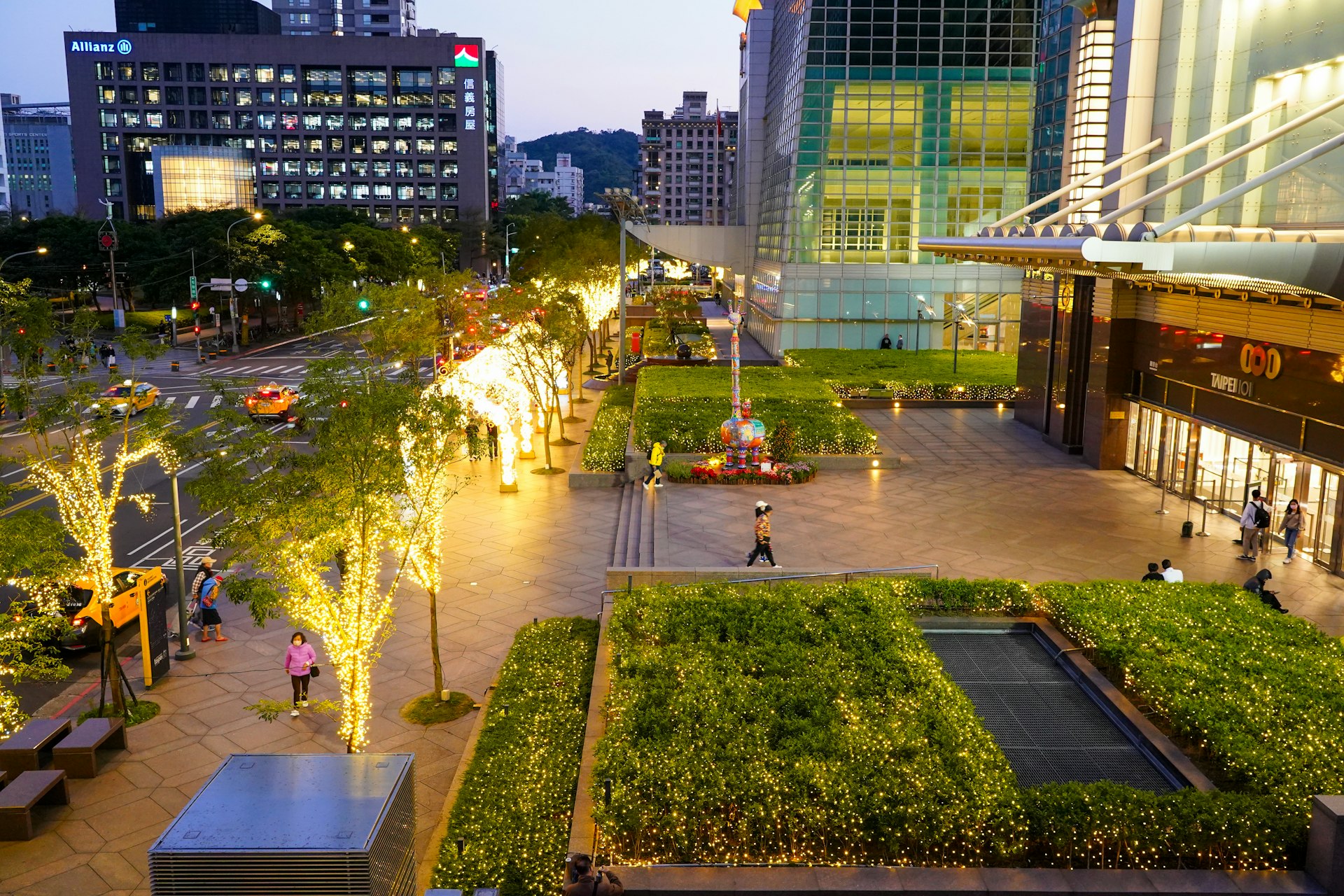
- Car parks. Even lighting without deep shadow, clear pedestrian routes to lifts and exits, glazed lift lobbies and stairwells, and no hidden recesses beside parking bays. Car parks are where natural surveillance is weakest, so they usually need the most attention.
- Landscaping. Planting that keeps sightlines open at eye level, such as low shrubs and trees with clear trunks, and no dense planting beside paths, doors and windows. A maintenance plan keeps it that way as the landscape grows.
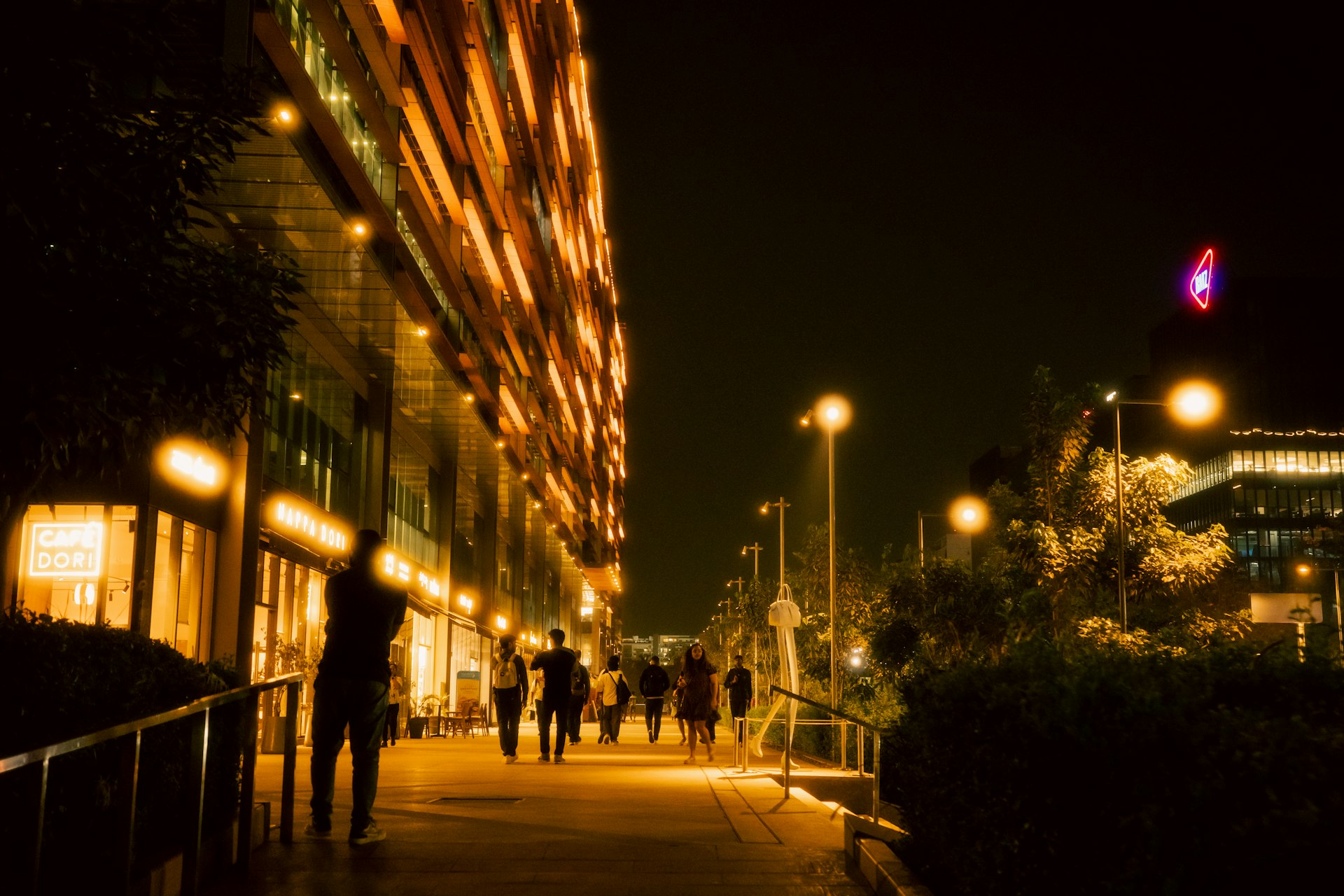
- Paths, laneways and public space. Routes that follow the way people actually want to walk, are overlooked by active frontages and avoid blind corners and entrapment spots, with clear wayfinding so people are not left looking lost.
- Lighting. Lighting designed for people as well as vehicles, so faces can be seen along a route, and coordinated with the CCTV design so that cameras record usable images at night.
- Boundaries and fences. Fencing, surface changes and signage that mark the shift from public to private space, using see-through fencing where surveillance matters more than a solid barrier.
- Management. Fast removal of graffiti and repairs to damage, clear ownership of each area and a review of the layout after any pattern of incidents.
Second generation CPTED, developed by researchers Gregory Saville and Gerry Cleveland in the late 1990s, adds social measures to these physical ones. It looks at social cohesion, connections between the site and the surrounding community, local culture and whether an area is under pressure from too many competing uses. It is most relevant to precincts, housing and public domain projects, where the community is part of the solution.
How is CPTED applied in Australia?
There is no single national CPTED law in Australia. CPTED reaches projects through the state planning systems, local council development controls and the published guidance of each state.
- New South Wales. Councils can require a crime risk assessment for certain development applications under guidelines made under the Environmental Planning and Assessment Act 1979, and NSW Police runs the Safer by Design program.
- Queensland. The Queensland Police Service publishes the Crime Prevention Through Environmental Design Guidelines for Queensland.
- Victoria. The Safer Design Guidelines for Victoria set out design principles for safer streets, public spaces and buildings.
- Other jurisdictions. South Australia and the ACT apply CPTED principles through their planning codes and local council design guidance.
Internationally, ISO 22341:2021 gives a common framework for the principles, elements, strategies and processes of CPTED.1 For crowded places, the Australia and New Zealand Counter-Terrorism Committee guidance encourages owners and operators to consider design measures alongside operational ones, and CPTED thinking is often the starting point for hostile vehicle mitigation and wider protective design.
What does a CPTED assessment involve?
A CPTED assessment reviews a site or a design against the principles and the local crime picture, then recommends practical changes. A typical assessment follows these steps.
- Context and crime data. Reviewing local crime statistics, the surrounding land uses and the site’s intended users and hours of operation.
- Design or site review. Examining plans, or walking the site by day and at night, to test sightlines, entries, lighting, landscaping, car parks and service areas.
- Risk rating. Rating the crime risk in line with the relevant state guidance and the organisation’s own security risk assessment method.
- Recommendations. Setting out design changes and management measures, prioritised so that the most effective and least costly are addressed first.
- Integration. Aligning the recommendations with the lighting, landscape, access control and CCTV design so that the disciplines support each other.
The output is a report that can support a development application and, more importantly, guide the design team while changes are still cheap.
Which projects benefit most from CPTED?
CPTED applies to almost any built environment, but it adds most value where public access, night-time use or vulnerable users are part of the brief. Common examples include residential and mixed-use developments, shopping centres and car parks, transport interchanges, schools and university campuses, hospitals and health precincts, parks and public domain works, and government and justice facilities.
On existing sites, CPTED is also a quick, low-cost way to respond to a pattern of incidents. Lighting upgrades, trimming vegetation, closing redundant entries and improving maintenance often reduce problems before any new technology is needed.
How Agilient supports CPTED and security in design
Agilient provides independent CPTED advice as part of its physical security consulting, working with architects, developers, councils and facility owners. Agilient does not sell or install equipment, so its recommendations are driven by the risk and the design, not by a product.
CPTED assessments
Design and site reviews against the CPTED principles and state guidance.
Crime risk reports
Reports to support development applications and planning conditions.
Security in design
Security input from concept through detailed design and construction.
Lighting and sightlines
Reviewing lighting, landscaping and layout for natural surveillance.
CCTV and access control
Electronic security specified to support, not replace, good design.
Crowded places and HVM
Protective design for public spaces and vehicle-borne threats.
Agilient also delivers in-house CPTED training for design, planning and facility management teams, so that the principles are applied consistently on future projects.
Agilient works across Sydney, Melbourne, Brisbane, Adelaide, Canberra and regional Australia.
Design crime out before construction starts
A CPTED review at concept or design stage is one of the most cost-effective security decisions a project can make.
Frequently asked questions about CPTED
What does CPTED stand for?
What are the principles of CPTED?
Is CPTED a legal requirement in Australia?
What is the international standard for CPTED?
When should a CPTED assessment be done?
How does CPTED relate to CCTV and access control?
What are some examples of CPTED?
- International Organization for Standardization, ISO 22341:2021 Security and resilience, Protective security, Guidelines for crime prevention through environmental design, iso.org
- Queensland Police Service, Crime Prevention Through Environmental Design Guidelines for Queensland, police.qld.gov.au
- Victorian Government, Safer Design Guidelines for Victoria, planning.vic.gov.au
- NSW Police Force, Safer by Design, police.nsw.gov.au