
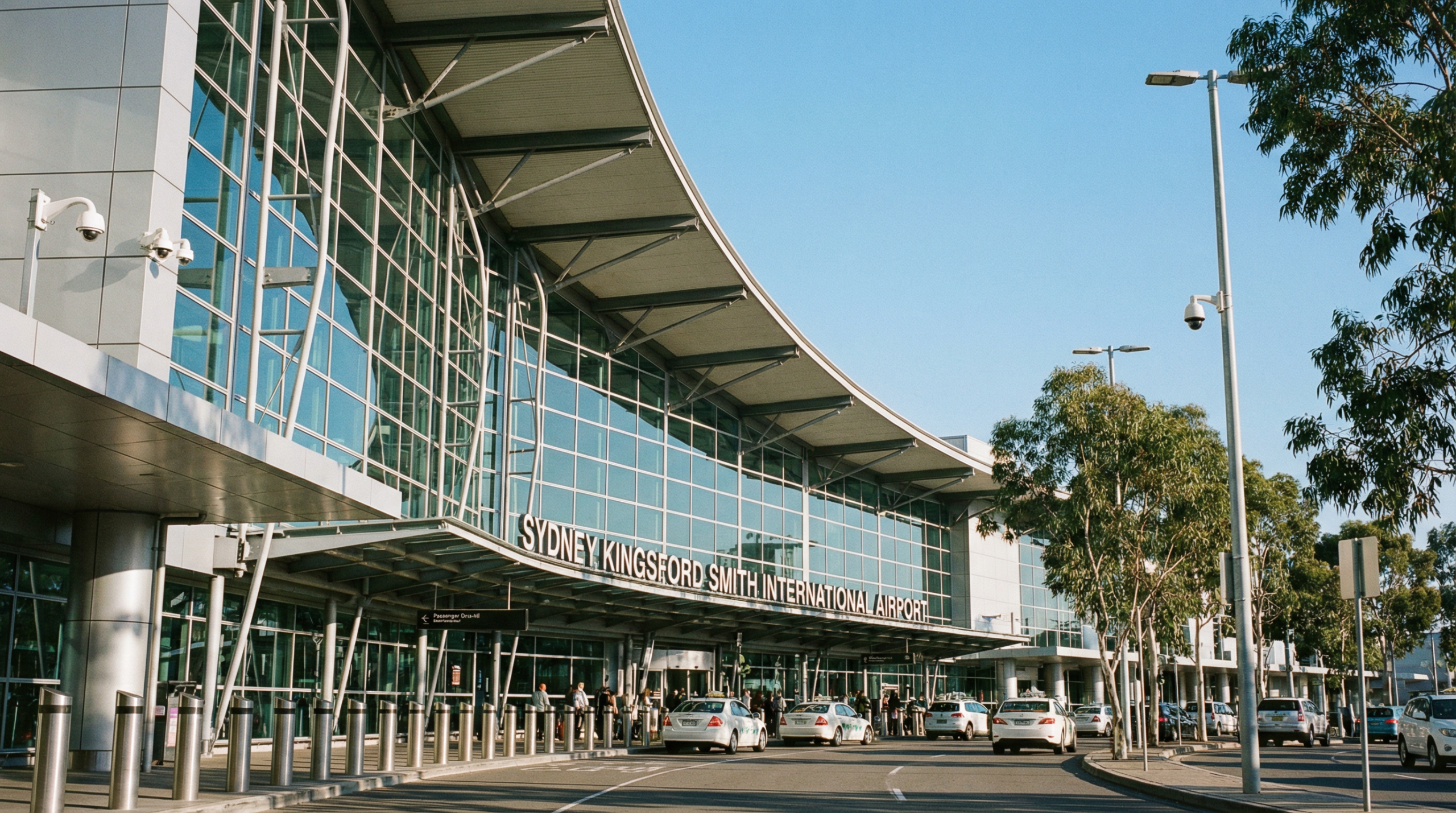
Aviation security in Australia is the framework of approved security programs, controlled airport areas, identity checks and screening that applies to airports and aviation industry participants under the Aviation Transport Security Act 2004. It is administered by the Department of Home Affairs and is designed to deter, detect and prevent unlawful interference with aviation. This page sets out who must comply, what the regime requires, and how it is changing under the 2025 transport security reforms.
Who must comply with the ATSA?
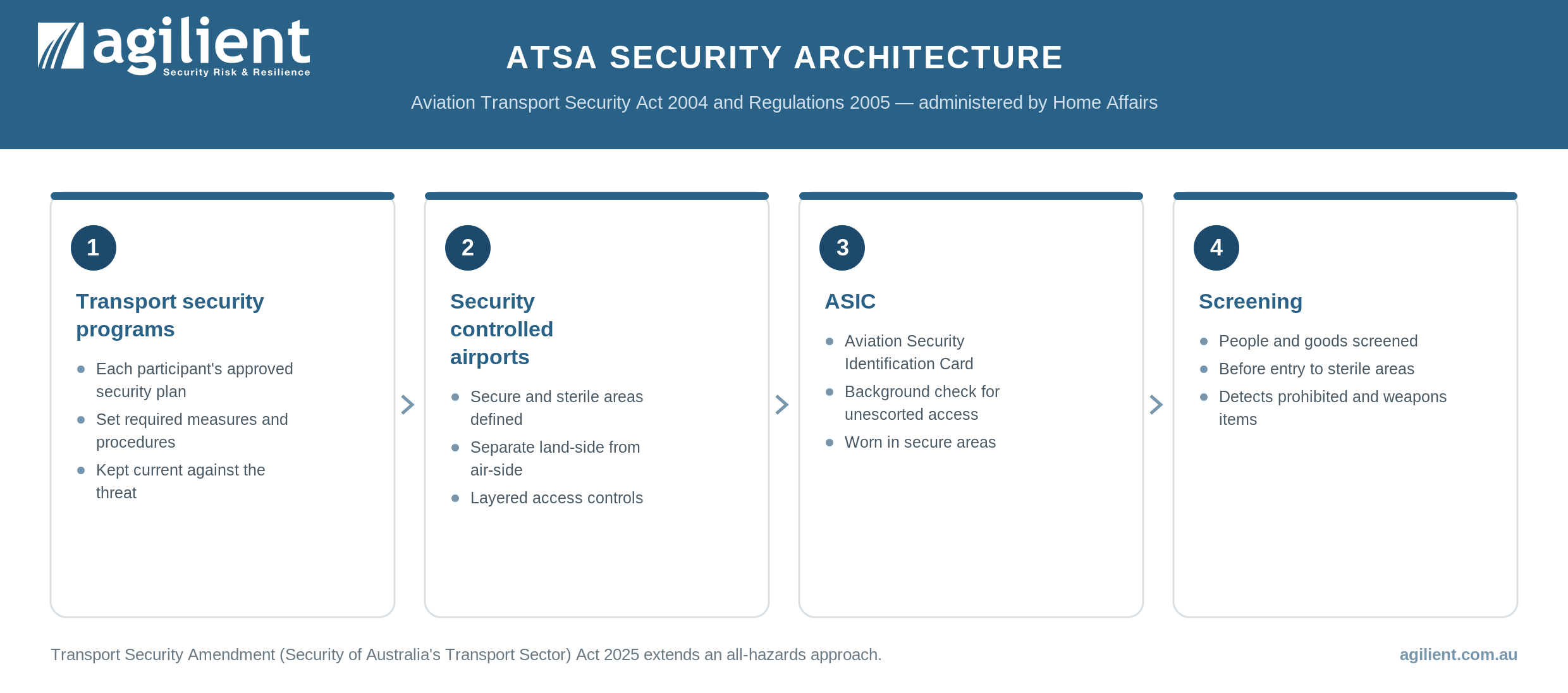
Aviation security operates under the Aviation Transport Security Act 2004 and the Aviation Transport Security Regulations 2005, administered by the Department of Home Affairs. The framework establishes minimum security requirements for civil aviation and is built to deter, detect and prevent acts of unlawful interference.
It applies to aviation industry participants, including airport operators, aircraft operators, regulated air cargo agents and screening authorities. Participants in scope maintain approved security arrangements proportionate to their role in the aviation system.
What do transport security programs and secure areas require?
A transport security program (TSP) is the central compliance document for an aviation industry participant. It sets out the security measures and procedures the participant will apply, and it is expected to be kept current as the threat environment changes.
Security controlled airports separate land-side areas from secure and sterile areas. Sterile areas are those passengers reach after screening, and access to them is tightly controlled. This layering keeps unscreened people and goods away from aircraft and other sensitive parts of the airport.
What are the ASIC and screening requirements?
The Aviation Security Identification Card (ASIC) confirms that the holder has passed a background check and is permitted unescorted access to the secure areas of a security controlled airport. It is a layer of assurance about the people working in sensitive areas, not a general access pass.
Screening of people and goods is a core control. Passengers, staff, baggage and cargo are screened before entering sterile areas, to detect prohibited items and weapons. Screening authorities operate under requirements set in the Act and Regulations.
How is aviation security regulation changing?
The Transport Security Amendment (Security of Australia’s Transport Sector) Act 2025 amended the ATSA to introduce a risk-based, all-hazards approach aligned with the model under the Security of Critical Infrastructure Act. The Department of Home Affairs is developing amendments to the 2005 Regulations to implement the changes.
The direction is away from a purely prescriptive, access-focused regime toward an outcomes-focused model that addresses a wider range of hazards. Participants that already manage security through structured risk assessment are well placed to adapt.
How does Agilient support aviation participants?
Agilient is an independent, vendor neutral security and risk consultancy with experience across the aviation sector. Engagements typically start with a security risk assessment that establishes the threat and risk picture for an airport or aviation operation and identifies the controls that matter most under the ATSA.
From there, Agilient supports transport security program development, protective security advice, and building and facility security design for terminals and airside infrastructure. The method is set out on the security risk management pillar. Advice is independent of any product or installer.
Strengthen your aviation security arrangements
Speak with Agilient about your aviation security obligations, from transport security programs and secure areas to the ASIC, screening and the 2025 reforms. The usual first step is a security risk assessment mapped to the ATSA.
Request a security risk assessment
or read about the service
Frequently asked questions
What is the ATSA?
Who needs a transport security program?
What is an ASIC?
What is screening at airports?
How is aviation security regulation changing?
- Federal Register of Legislation, Aviation Transport Security Act 2004 and Aviation Transport Security Regulations 2005, legislation.gov.au
- Department of Home Affairs, Aviation security, homeaffairs.gov.au
- AusCheck, Aviation Security Identification Card, auscheck.gov.au
- Federal Register of Legislation, Transport Security Amendment (Security of Australia’s Transport Sector) Act 2025, legislation.gov.au