
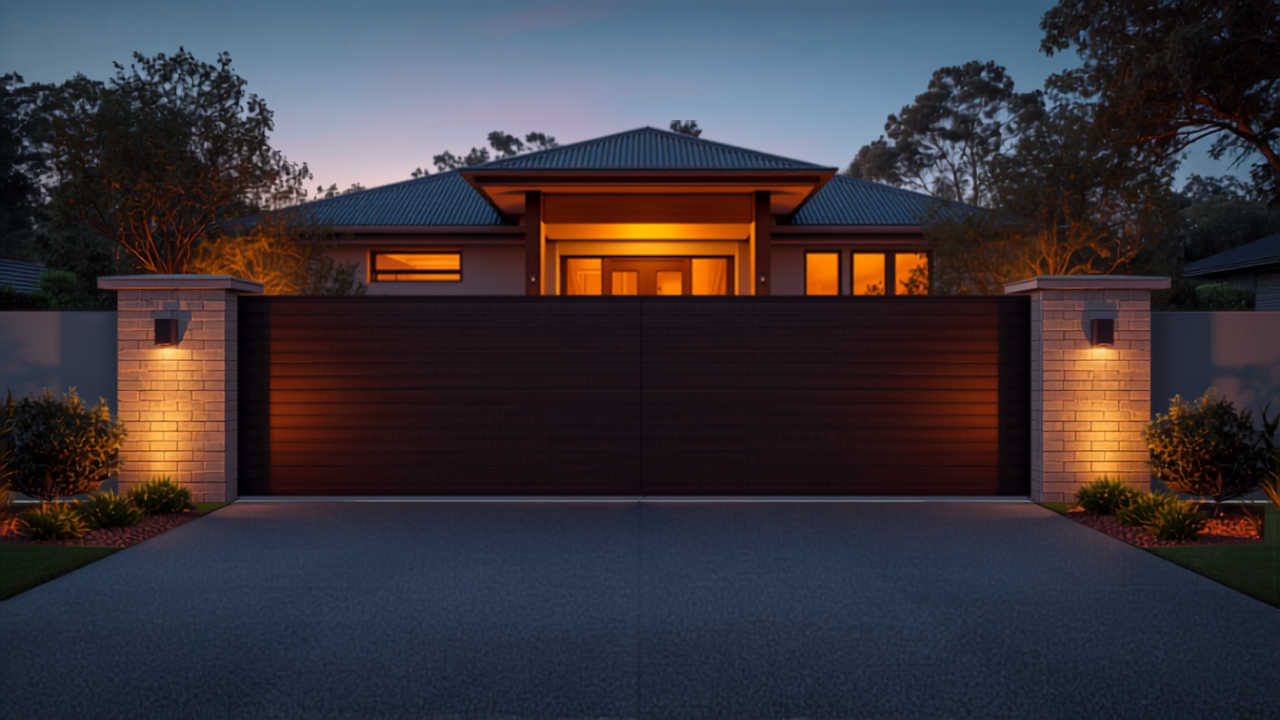
A person with a public profile carries their risk home with them. For a judge, a chief executive, a well-known athlete or a media figure, the family residence is where exposure is highest and protection is usually weakest. High-profile home security is the practice of bringing the same structured, risk-based thinking used to protect a workplace to the place where the individual and their family actually live, using technologies that are available on the open market rather than anything exotic.
The aim is not to turn a home into a compound. It is to make the residence a hard, unattractive target, to buy time and warning when something does go wrong, and to give the household a clear, rehearsed way to respond. Most of that is achieved through good design, layered electronic security, and a few sensible habits.
Key takeaways
- High-profile home security layers physical design, electronic systems and personal practice so that no single failure exposes the household.
- It begins with a residential security risk assessment, not with buying equipment.
- Crime Prevention Through Environmental Design (CPTED) shapes the perimeter and grounds so the property deters and delays an intruder before any alarm sounds.
- Monitored intruder alarms, CCTV and access control installed to the relevant Australian Standards do the detection and verification work.
- The largest exposures are often not physical at all. They are online information, predictable routines, and household staff and contractors.
Why is a high-profile home a different security problem?
An ordinary home faces opportunistic property crime. The Australian Bureau of Statistics recorded that 2.1 per cent of households, around 218,000, experienced a break-in or attempted break-in in 2023 to 24, up from 1.8 per cent the year before.¹ Most of those offenders want property and want to avoid the occupants.
A high-profile residence faces that same baseline risk and a second category on top of it: people who are interested in the individual rather than their possessions. That includes fixated persons, aggrieved litigants, activists, stalkers, and opportunists who recognise a public face. The motivation may be grievance, obsession, publicity or money, and the offender is often prepared to approach when the person is home rather than when the house is empty.
The judiciary is a clear illustration. Research surveyed by the Australian Judicial Officers Association found that a majority of Australian judicial officers had experienced some form of threat, with a substantial share facing threats of actual harm, and the association has pressed for consistent protective measures including at judges’ homes.² Senior executives, public servants in contentious portfolios, and recognisable sporting and entertainment figures sit on the same spectrum. The common thread is that the home address, once known, becomes the most reliable place to find the person.
This is why high-profile home security starts from threat, not from hardware. The right system for a Supreme Court judge presiding over organised-crime matters is not the right system for a chief executive whose concern is commercial extortion, and neither matches what a celebrity needs against persistent fans and paparazzi.
Where do you start: the residential security risk assessment
The first step is a security risk assessment of the residence, conducted the same way a corporate site assessment would be, in line with AS/NZS ISO 31000:2018 Risk Management Guidelines.³ The assessment establishes who and what is being protected, the credible threats, and how the property as it stands would stand up to them.
A residential assessment typically considers:
- The specific threat picture for the individual and the household, including any history of threats, the public role, and current grievances or matters on foot.
- The property itself: approaches, sightlines, boundaries, lighting, entry points, landscaping and existing security measures.
- Routines and patterns of life that an observer could learn, such as school runs, gym times and regular travel.
- The people with legitimate access, including family, domestic staff, gardeners, cleaners, trades and deliveries.
- The household’s ability to detect, delay and respond to an intrusion, and to summon help.
The output is a prioritised set of measures ranked by risk reduction, cost and practicality, rather than a sales list of products. That distinction matters, because vendor-led “assessments” tend to recommend whatever the vendor installs. An independent assessment recommends what the household actually needs.
How do you secure the perimeter and the grounds?
Good residential security is layered, working from the street boundary inwards so that an intruder meets successive obstacles and successive chances to be seen and recorded. CPTED gives the design language for the outer layers. Its principles, as promoted by Australian police and community-safety bodies, are natural surveillance, access control, territorial reinforcement and good space management or maintenance.⁴
In practice, for a high-profile residence that means:
- Natural surveillance. Trim landscaping so the approaches and entry points are visible, rather than planting the dense screening that privacy-conscious owners often prefer. Where privacy and surveillance conflict, resolve it with fencing and positioning rather than with cover that also conceals an intruder.
- Access control. Define a single, well-lit main approach. Use solid perimeter fencing and gates, a vehicle gate with intercom and camera, and pedestrian access that funnels visitors to one identifiable point.
- Territorial reinforcement. Make the boundary between public footpath and private property unmistakable, so that anyone crossing it has clearly chosen to do so. Lighting, surface changes and signage all contribute.
- Maintenance. A property that is well kept signals that it is occupied, watched and cared for. Failed lights, broken gates and overgrowth signal the opposite.
Layered, graded perimeter lighting and sensor-activated lighting around the house remove the cover of darkness without floodlighting the neighbours. The goal across all of this is delay and warning. Every additional barrier and every additional second of exposure makes the residence a worse target.
What electronic security does a high-profile home need?
Electronic systems do the detection, verification and response work that physical design cannot. For a high-profile home the core elements are a monitored intruder alarm, CCTV and access control, specified and installed to the relevant Australian Standards and tied together so they support one another. This is the domain of electronic security design.
Intruder alarm, monitored. A modern alarm covers the perimeter and the internal space with a mix of sensor types to confirm a genuine intrusion and reduce false alarms. The AS/NZS 2201 series, Intruder alarm systems, sets the requirements for design, installation, commissioning and monitoring, and grades systems by class according to the level of protection required.⁵ For a high-profile residence the alarm should be professionally monitored so that a verified activation produces a real response rather than a noise the neighbours ignore.
CCTV. Cameras provide the verification layer, allowing an activation to be assessed before anyone is sent, and they provide an evidential record. The AS 4806 series, Closed circuit television (CCTV), covers the selection, planning, installation and operation of camera systems.⁶ Coverage should take in the approaches, entry points and grounds, with image quality good enough to identify a person, not merely to notice movement. A CCTV and security camera design done well integrates with the alarm so that an event in one system cues the other.
Access control. Credential-based entry, using encrypted fobs, PIN pads, smartphone credentials or biometrics, replaces keys that can be copied and never returned. It also creates a record of who entered and when, which matters in a household with staff and regular trades.
The integrating principle is verification. Sensors detect, cameras confirm, monitoring assesses, and only a verified event triggers a response. That chain is what separates a serious system from a collection of devices.
Duress, safe rooms and a response that has been rehearsed
Detection has value only if it leads to a response, and for a high-profile household the response plan deserves as much attention as the equipment.
Duress alarms, fixed at key points such as the bedside and the main living area and carried as a personal pendant or phone app, let an occupant summon help silently when an offender is already present. They are the single most useful addition for a household whose main concern is a person-directed threat rather than a burglary, because they work in exactly the moment when an ordinary alarm does not.
A safe room, or at minimum a hardened bedroom with a solid core door, secure lock, independent communications and a duress capability, gives the household a defensible place to retreat to and hold while help arrives. It does not need to be a bunker. It needs a door an offender cannot quickly defeat and a reliable way to call for assistance from inside it.
None of this works without a plan that the household has actually practised. Who calls whom, where the family gathers, what the monitoring centre and any response provider will do, and how police are engaged, should be written down, briefed to everyone including older children and live-in staff, and rehearsed. A plan that exists only in the principal’s head is not a plan.
The exposures that are not physical at all
For high-profile individuals the most exploitable weaknesses are frequently information and people, not locks and cameras.
Online information. Home addresses, photographs that reveal layout, property listings, electoral and company records, and the geolocation tags on social media posts can hand an interested party everything needed to plan an approach. Reducing this exposure, by removing the address from public records where possible, disabling location data, and being deliberate about what the household and its younger members post, is often the highest-value action available and costs nothing.
Routine. Predictability is what allows an offender to choose a time and place. Varying departure times and routes, and avoiding posting locations in real time, denies that advantage.
Household staff and contractors. Cleaners, gardeners, nannies, drivers, trades and deliveries all hold legitimate access, and a high-profile home tends to have many of them. Appropriate screening of those in trusted positions, controlled and logged access, and a simple protocol for verifying unexpected callers and deliveries close a gap that technology alone cannot.
These measures are unglamorous and they are where a great deal of real risk reduction sits. An offender who cannot find the address, cannot predict the movements and cannot talk their way past the front gate has lost most of their options before any alarm is tested.
How Agilient Can Assist
Agilient is an independent, vendor-neutral security and risk consultancy. Because Agilient does not sell or install equipment, its advice is shaped by the household’s risk rather than by a product range.
For high-profile individuals and the organisations responsible for them, Agilient provides a confidential residential security risk assessment that examines the threat picture, the property and the household’s routines, then sets out a prioritised, costed set of measures. Where electronic systems are warranted, Agilient specifies electronic security, CCTV and duress solutions to the relevant Australian Standards, and can oversee procurement and installation so that what is delivered matches what was designed.
The same team supports government departments, courts, healthcare and major corporations across Sydney, Melbourne, Brisbane, Adelaide, Canberra and regional Australia, which means residential work for judges, executives and public figures is informed by current protective-security practice rather than treated as a one-off.
Request a confidential residential security risk assessment or book a short briefing to talk through a specific situation in confidence.
Frequently asked questions
What is high-profile home security?
High-profile home security is the protection of the residence of a person with a public profile, such as a judge, executive, sportsperson or media figure, against threats directed at the individual as well as ordinary property crime. It combines a residential security risk assessment, layered physical design, monitored electronic systems, and personal and information-security practices into one tailored plan.
How is protecting a VIP home different from a normal home alarm?
A standard home alarm is built around opportunistic burglary, where the offender wants to avoid the occupants. A high-profile home must also account for offenders who are interested in the person and may approach while the household is present. That shifts the emphasis towards verification, monitored response, duress capability and a rehearsed plan, not just intrusion detection.
Where should I start?
Start with an independent residential security risk assessment rather than with buying equipment. The assessment, conducted in line with AS/NZS ISO 31000, identifies the real threats and vulnerabilities for the individual and the property, and produces a prioritised list of measures so that money is spent where it reduces the most risk.
Which Australian Standards apply to home security systems?
Intruder alarm systems are covered by the AS/NZS 2201 series, and closed circuit television by the AS 4806 series. Specifying and installing systems to these standards is what distinguishes a professionally engineered solution from an assortment of consumer devices.
Do I need a safe room?
Not every household does. For higher threat levels a safe room, or at least a hardened bedroom with a solid core door, secure lock, independent communications and a duress alarm, gives the family a defensible place to retreat to while help arrives. The risk assessment determines whether it is warranted.
What is the most overlooked risk for high-profile individuals?
Information and routine. A publicly available home address, geotagged social media posts and predictable daily movements often give an offender more than any physical weakness in the property. Reducing that exposure is usually the highest-value and lowest-cost action a household can take.
References
- Australian Bureau of Statistics, Crime Victimisation, Australia, 2023–24 financial year, abs.gov.au
- Australian Judicial Officers Association, Supporting judicial well-being: rising threats to the safety and security of judicial officers, 2025, ajoa.asn.au
- Standards Australia, AS/NZS ISO 31000:2018 Risk Management — Guidelines, standards.org.au
- Neighbourhood Watch Australasia and Australian police crime-prevention guidance, Crime Prevention Through Environmental Design (CPTED), nhw.com.au
- Standards Australia, AS/NZS 2201 series Intruder alarm systems, standards.org.au
- Standards Australia, AS 4806 series Closed circuit television (CCTV), standards.org.au