
CCTV guide
CCTV for childcare and early learning centres
Cameras that support child safety and supervision, governed the way the new national rules expect.
Childcare CCTV is the camera system an early learning or childcare centre uses to support child safety, secure entries and outdoor areas, and give regulators and investigators evidence when something goes wrong. Since the national child safety reforms of 2025 and 2026, services that use CCTV must have a written policy covering it, a national CCTV trial is under way, and in NSW services can be directed to install cameras, but CCTV still supports, and never replaces, active supervision.
- There is no national requirement for every service to install CCTV, but since 01/09/2025 a service’s policy on digital technologies must cover the use of any optical surveillance device such as CCTV.
- A Commonwealth-funded national CCTV assessment in up to 300 services is under way, and will advise ministers on best practice use, privacy and storage.
- Staff personal devices are banned while working with children, except for authorised essential purposes, but authorised centre CCTV is treated differently.
- Cameras must not go where children and staff expect privacy, such as children’s bathrooms, and they cannot replace bed-side sleep checks.
What rules apply to CCTV in childcare?
- National reforms: in August 2025, Education Ministers agreed to ban or restrict personal devices for staff working with children and funded a national CCTV assessment in up to 300 services to advise on best practice use and operation.1 Further changes followed, including a valid Working with Children Check before starting work and a national early childhood worker register from 27/02/2026.2
- CCTV policy: from 01/09/2025, the policy every service must hold on the safe use of digital technologies and online environments must address the use of any optical surveillance device, such as CCTV.3 ACECQA’s guidance asks services to keep cameras out of places where people expect privacy, such as children’s bathrooms, to comply with privacy and workplace surveillance laws, and to control who may view footage and how long it is kept.4
- Personal devices and CCTV: the offences for staff using personal devices to capture images of children do not apply to images from a CCTV system installed at the service and authorised by the approved provider.5
- State measures: Victoria’s Rapid Child Safety Review called for a national trial of CCTV as a regulatory and investigative tool, addressing data security and access.6 NSW has given its Minister power to direct services to install CCTV where there is an unacceptable child safety risk.7
- Privacy and workplace surveillance: providers covered by the Privacy Act must tell people they may be recorded and keep footage secure,8 and workplace surveillance laws in NSW and the ACT require written notice to staff before surveillance starts.
What does good childcare CCTV look like?
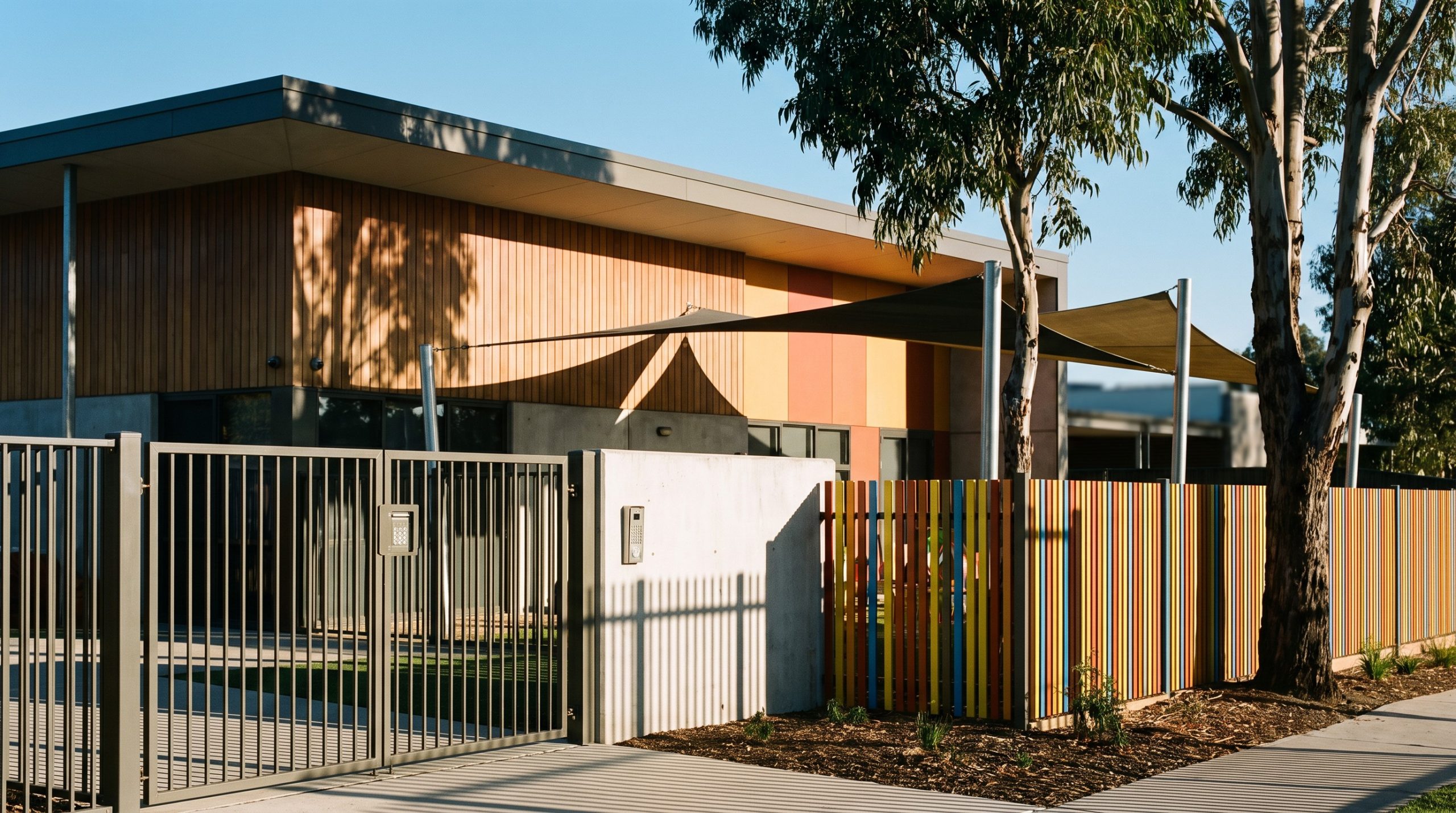
The physical environment has to support supervision. The National Regulations require premises, including toilets and nappy change areas, to be designed to allow supervision while maintaining children’s rights and dignity, and outdoor spaces to be securely fenced.9 CCTV adds to that design; it does not substitute for it. A well governed system has:
- a written CCTV policy within the digital technologies policy, shared with families and staff;
- coverage of entries, sign-in and collection points, play spaces and the perimeter, with no cameras in bathrooms or nappy change areas;
- secure storage, individual logins and audit trails, with clear rules on who can view and export footage;
- a set retention period and a process for giving footage to the regulator or police;
- written notice to staff and clear signs for families and visitors; and
- regular checks that cameras work, with educators still carrying out active supervision and physical sleep checks.
ACECQA is explicit that CCTV and viewing windows cannot replace physical bed-side checks during sleep and rest.9
How Agilient supports childcare CCTV
Agilient provides independent CCTV consulting for approved providers and early learning groups: camera strategy and coverage reviews, CCTV policy and privacy reviews against the new requirements, access control and perimeter assessments, and specifications for new centres or upgrades. Agilient does not sell or install cameras. Its wider childcare and early learning security work covers site risk assessments and lockdown and emergency planning, and the CCTV upgrade guide explains how to modernise an existing system.
Other CCTV sector guides: schools, universities, aged care, hospitals, councils, stadiums and venues, racing and critical infrastructure.
Reviewing CCTV at your centres?
A short briefing will help you test your cameras and CCTV policy against the new national requirements.
Childcare CCTV FAQs
Is CCTV mandatory in childcare centres?
Can childcare centres have cameras in bathrooms or nappy change areas?
Does CCTV replace supervision in childcare?
Can staff use their own phones instead of centre CCTV?
- Minister for Education, Education Ministers Meeting communique, 22 August 2025, jasonclare.com.au
- Victorian Government, Child safety reforms: new laws take effect, vic.gov.au
- ACECQA, NQF child safety changes, 1 September 2025 and 1 January 2026, acecqa.gov.au
- ACECQA, Policy guideline: safe use of digital technologies and online environments, acecqa.gov.au
- ACECQA, Digital devices information sheet, acecqa.gov.au
- Victorian Government, Rapid Child Safety Review 2025, vic.gov.au
- NSW Government, New laws require transparency in early learning and enforce a ban on personal mobile devices, nsw.gov.au
- Office of the Australian Information Commissioner, Security cameras, oaic.gov.au
- ACECQA, Guide to the NQF: Quality Area 3, physical environment, acecqa.gov.au